Showing posts with label People. Show all posts

Wednesday, July 15, 2009

Wayne Weeks Update

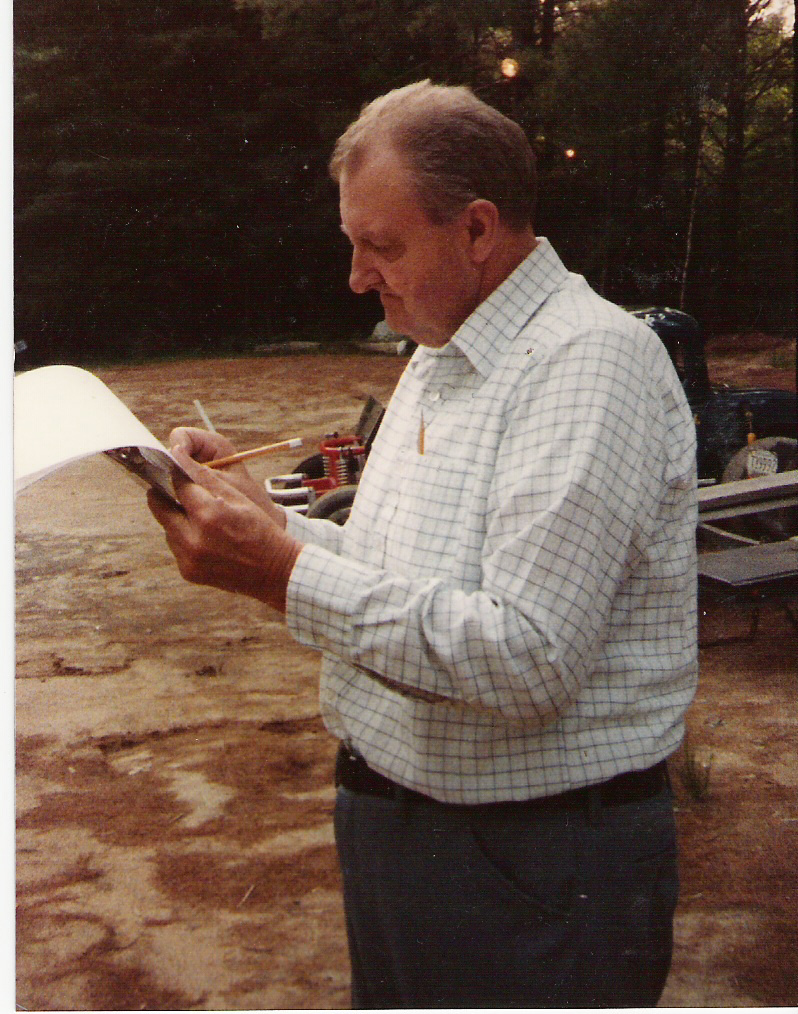
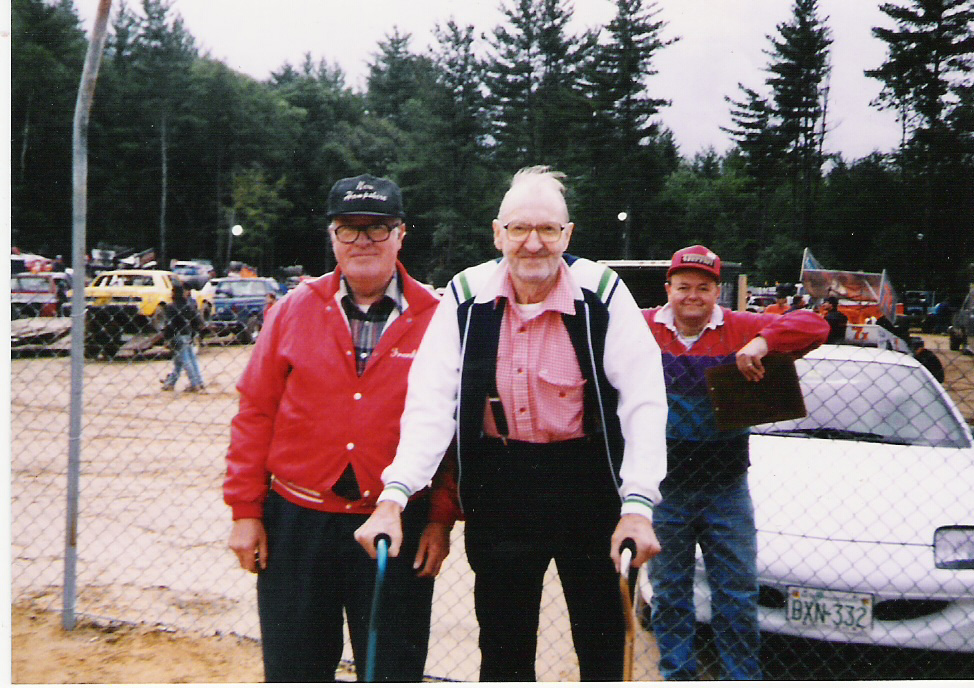
First of all, you probably already heard that Wayne Weeks, long-time operator of the Nor-Way Pines Speedway, passed away around the new year. A lot of you read the piece I wrote on him, and contacted him. Word is that he really appreciated hearing from you, as has the family. JJ Sanville and his family went down last fall for a visit, and they sent me some pictures. Here's a good one.
The other news, which you probably also know, is that the Legion Speedway did in fact find a new lessor. I forget the gentleman's name, but the track is now known as the Rattlesnake Motordrome. When I feel ambitious I'll add the link, and remove the probably-dead link for the Legion Speedway.

And now, the point. The point, of this blog, is for communication. Instead, what it's been is me telling a bunch of stories and running some pictures. Don't get me wrong, it's been fun, but I know for a fact that I am not the only one who's got a story or two to tell about dirt track racing in the Northern New England area.

I'm not any sort of historian. I've just been around a while. Haven't you? Don't you have some stories to tell? Don't any of the things you've see here bring back any memories? Then fer cryin' out loud hit that comment button and share a little, will ya? I'll keep sticking my own stories on here, but I sure would like to hear from you. And put it here, where everybody can join in, not in an email to me.

So let's hear from you, all right?

Saturday, July 26, 2008

Wayne Weeks

"Why the heck do they call this place the Nor-Way Pines Speedway?" the old race fan asked. "There ain't a doggone Norway pine on the place; just white pine."

Oh, ye of little mind. First, we need to discuss a little history.

The little dirt track on the Rumney / Wentworth town line began life around 1961 as the Legion Bowl. American Legion Post # 66 owned - and still owns - the land, and they also ran it in the early days, as they do now. It closed in the mid-60's and lay fallow for the better part of a decade. Finally, around 1974 or so, two enterprising racers leased the property from the Legion and re-opened the track. These two men were NORman Roulx and WAYne Weeks. Hence, NOR-WAY Pines. Get it now?


Wayne, giving Mike Vincellette the flag after a Qualifier victory.

According to legend, Wayne Weeks and his wife, Louella, came home one evening in 1958 and discovered a '54 Ford that hadn't been there before. The next day their nephew, Norm Roulx, showed up and announced that the Ford was their new race car. They raced the car, and its successors, at various tracks for the next ten years or so, centering their activities around Barre, VT's Thunder Road. They co-owned the car and hired drivers, the most prominent being the late, great Hank Montanden.

Finally, in 1968 Wayne became one of the ownership group that founded the Bear Ridge Speedway in Bradford, VT along with C. V. Elms and George Barber. Eventually, he and Norm broke away to re-open the old Bowl.


Wayne giving a trophy to 4-time Nor-Way Pines / Pines Speedway / Legion Speedway champion, Ray Heath, Jr.

Wayne was the flagman, and Norm served at the track announcer. Norm eventually moved on and Wayne ran the track by himself, continuing to operate the Speedway into the mid-1990's. Eventually, he found someone to take over the lease and he retired to Florida where he and Louella, and most of the kids, live today.


Wayne with the late, great Larry Welch

Everybody's got their favorite memories of Wayne Weeks. When he was frustrated with a driver, he would jump down from the flag stand and shake the black flag in their face. He took a lot of crap from a lot of people over the years, and all with stoic silence. His word was law. If he kicked you out for two weeks, you were out. Period.

He ticked off a lot of people by not changing his mind and ruling in their favor. Most of these people miss him badly now. Whatever else you want to say about Wayne Weeks, he was fair. His perspective was that of a race fan. He knew where the Nor-Way Pines sat on the racing food chain; at the bottom. And he liked it that way. He made his rules so that any half-decent shade-tree mechanic could put together a competitive car. And he ran his track so that anyone with their head screwed on straight would get a chance to do their stuff.

He will be happy to learn that the Legion post that owns the land is using him as a model now that they're running things again. They have bypassed a lot of avenues for increasing revenue, like making teams buy tires from the track or jacking up the prices at the consession stand. Instead, they're making it easy to race, and to go watch.

Wayne has been very ill recently, but his youngest daughter, Alicia, says he'd be thrilled to hear from race fans and anybody else from up North. You can leave comments here, or email Alicia at alicia13@tampabay.rr.com. Be sure to tell him I said hello.

Friday, May 09, 2008

A Model Citizen

A Model Citizen

Neal Davis is a long-time race fan from New Hampshire who makes models. As you can see, he does a really good job of it, too. He even makes them to sell. He's already shown his work at Canaan USA Speedway, and we're hoping to have him at the Legion Speedway soon.

This is a model of Jim Fadden's old coupe that he used to run at the Nor-Way Pines. I think Jim finished second in the Coupe division one year. He also ran very successfully in the Late-Model class. This car dates back, I think, to the early '80's.

This is the car that Tyler Rich drove to the B-Coupe championship in 2007. Tyler comes from Lyme, and is one heck of a driver. I believe he's got a new car for '08, so this is already a piece of history.

This is Bill George's '34 Ford coupe, built from pictures shown on this very blog. I'm so happy . . . Bill was my hero, and this car was actually built by my uncle Jim Parris back in '63. Bill won the championship at the 106 Midway Raceway with this in '64. If the name of that track doesn't sound familiar, it later became Bryar Motorsport Park, and finally New Hampshire International Speedway.
If you want to know more about Neal and his models, drop him an email at:
Hope you don't mind, Neal. If he complains, I'll edit this post and take the addy off, but you really should drop him a line. He does great work.

Wednesday, May 30, 2007

Ted Winot


There are certain constants in the racing universe. For example, dirt track racing works best at night, because the track doesn't dry out as fast. I could go on and on, but the point is that one of those constants is this; you need a good flagman.

The flagman is the glue that holds a race together. He/she is the law out there on the track. You may not realize it, but they have a lot more to do than keep track of how many laps left to go. They have to see literally everything that is going on, which makes a couple of good assistants indispensable. Plus, once they've seen everything, they have to be able to execute the necessary authority to see justice done. And they have to do it quick!

It's a largely thankless job, because when you get it right, it's expected. But God Almighty help you if you get it wrong! Or, if anyone has the perception of your being wrong. And all you have to do for that to happen is make a decision. Guaranteed, whoever you rule against has a section of grandstands eager to tell the world what a rotten, blind, lousy S. O. B. you are. You've got to be able to take it all with a smile. IF you can do that, and be a born showman on top of it all, you're on your way to being nearly as good as Teddy Winot.

I first became familiar with Ted when he was flagman at the Legion Bowl in the early '60's, but he already had a widespread reputation before that. He had flair, that's for sure. At the beginning of a race he would take a green flag in one hand and a red one (later yellow) in the other. He walked down to the beginning of the first turn and waited. Coming from the other direction was the field of race cars, lined up two by two and moving slowly out of turn four. He would stand on the infield, wagging the flags at them, beckoning them to come on.

Suddenly, he would leap into the air, the green flag waving. Switching it to his left hand he ran up the infield toward the start/finish line as the cars roared past. He usually timed it so that he and the last car met right there. Then, he would sprint across the track and leap onto the flagstand. He would perform this same ritual every time he started, or re-started, a race. He must have run ten miles every race day.

After a couple of years at the Bowl Keith Bryar came calling, looking for officials for his new track in Loudon, and a team was born. Marge and Pearl Clogston (my mother and grandmother, respecively) were the checkers, Sonny Clogston (my dad) signed on as Pit Steward, and Ted Winot would handle the flags. It was a combination that would also work together at the Riverside Speedway in Groveton, and the Bear Ridge Speedway in Bradford, VT.

It was a combination that would go a long way toward writing the book on how to run a race track, but to be perfectly frank the only irreplacable part of the machine was Ted. I've seen several good flagmen, and a bunch of mediocre ones, but there's never been one like him. He was easily as interesting as most of the races he presided over. As with anyone like that, the most memorable moments were the ones that went just a little wrong.

The 106 Midway Raceway in Loudon was a place where the best laid plans often went south. The reason was two-fold; the place attracted a ton of cars, and the track was tiny. About a fifth-mile, with an asphalt front straight, and I don't know where Keith Bryar got his clay but the rest of the track might as well have been paved also. Fast doesn't begin to describe it. Sometimes, too fast.

This was back when there was only one class. You brought a race car, and you raced. Sometimes fifty or sixty cars would show up, but that many cars simply wouldn't fit on the track. The max was 24, which meant a lot of racers watched the feature from their trailers. With that many cars, Dad and the Tech Inspector would come out to be infield flaggers.

So one night the feature's lined up, Ted's in turn one, the cars come out of turn 4, and up into the air he goes. He runs, the cars go, and he gets to the flagstand just as the last car goes past. He looks at turn 4, and here comes the leader. He hesitates. Big mistake. The field comes by, and there stands Ted on the wrong side of the track. Dad was laughing so hard he sat down in the infield. Eventually there was a wreck, the red flag came out, and a red-faced Ted flagged the rest of the race from the flagstand.


The Riverside Speedway in Groveton was a good track. It started about 1965 as a dirt track, but clay was hard to come by that first season. So, the owners used a mixture of fine sand and old drain oil. The picture here is of Ted in his trademark top hat after a hard afternoon. This was where he earned his nickname, "Rastus." If you think this is funny, you should have seen what he looked like after he took the hat off.

For its day, Riverside Speedway was one of the most well-thought-out facilities any of us had ever seen. Instead of a rickety set of bleachers, they built actual grandstands. The judges stand stood high above everything, and there was a VIP lounge below. At the back of the grandstands there was a large refreshment stand with a restaurant-quality kitchen, and under the stands was all the storage a track would ever need. There were even enough bathrooms.

The track was a large quarter-mile with steeply banked corners, and a solid concrete retaining wall. The flagstand was recessed into the wall, and a heavy-duty chain-link fence kept the fans and the track seperated. If you went up to the fence, there was a good three-foot drop to the track. Ted, of course, was athletic enough to be able to make the leap up to the flagstand. The only flaw in the design was that the door in the fence that allowed the flagman to bail out and into the grandstand area was on the turn 4 side of the stand, instead of the turn 1 side. This turned out to be an almost fatal flaw one day, as a car came out of 4, hit the wall, and went up into the air. It landed again right into the flagstand, and hung there. Ted dove for the door, and it's a good thing it opened easily because he actually went under the car to get away from the spot it came to rest.

It's odd how some things will make an impression on a kid. The thing that always amazed me about Ted when I was young was when we would leave the track at Loudon late on a Saturday night. There was a little place in downtown Laconia that would stay open until about 1 am called Mr. Sub's, that made the best toasted grinders you ever had. (Grinders? Oh, they call those subs now.) After the races the place would pack out with drivers, crews, fans, and of course the officials. The memory I will always have of Ted is him cruising from table to table in Mr. Sub's, holding the biggest, sloppiest meatball sandwich you ever saw in one hand, and never spilling a drop.

The team finally broke up in the early seventies. I don't know the reason, but I guess Ted just got tired of going to the races. His replacement wasn't very impressive, and he was the first in a long line who made us miss Ted all the more. I'm not even sure if Ted is still alive. If anyone knows, or has any more stories, feel free to post your comments.

By the way, the first photo is from the Legion Bowl, circa 1963. Both pictures were taken by Sonny Clogston.

Monday, July 24, 2006

Sonny's Boy


SONNY'S BOY

Hi. I'm Rick Clogston, and as of this writing I am the track announcer at the Legion Speedway in Wentworth, NH. I'm 50 years old, and have literally been involved in dirt track racing in NH and VT all my life. This blog will be the history of that, as seen through my eyes.

It will be a good idea, if this is a topic that interests you, to check the old entries every now and again, as I will be adding pictures, etc. as I go along. Also, it would be good to remember that this is all as I see it. This is not meant to be a definitive history, but merely some thoughts on a topic I've seen a lot about. Feel free to add your own comments as you see fit.

This first entry will be about my father, Albert "Sonny" Clogston. There was a time in my life that it kind of bugged me to be known as Sonny's Boy, but now when somebody remembers me as that, I consider it an honor. This isn't about him as my dad, though. This is about him as a race fan, and participant in the sport he loved so much.

Actually, it's also about my mom, Marge, and grandmother, Pearl. The three of them went as a package from track to track back in the 1960's. They were members of the American Legion post that owns the land the Legion Speedway rests on. The post built and opened the track in 1961, when I was 5. There is some dispute on that year, so if anyone can prove otherwise I'll happily revise, but I remember it being the summer before I started first grade. Dad was the announcer, Mom worked in the consession stand, and I forget what Gram did.

I was just a little squirt, but I remember the first two weeks of racing. The track didn't have a public address system, so Dad stood up on top of the judges stand, which was a platform with a roof, cupped his hands around his mouth, and yelled. The third week we got our first PA. Dudley Cotton, the brother of Senator Norris Cotton, brought his 1954 Plymouth sedan which had three bullhorns mounted to the roof. The microphone had a long cord, which they ran up to the judges stand, and that was the PA for the rest of the first season.


In '63, Dad, Mom, and Gram were offered jobs by Keith Bryar at his new 106 Midway Raceway. That track, by the way, eventually became Bryar Motorsport Park, and is now known as New Hampshire International Speedway. Back then, it was a 1/5 mile dirt bullring. Dad became the pit steward, and Mom and Gram were the checkers. For those of you who don't recognize those terms, the pit steward runs the pit area. He is everything from a rules enforcer to a parking attendant. The checkers keep track of the cars on the track, and the order in which they are running.

Dad enjoyed being Pit Steward. He got to hang out with all the drivers and crews, and they respected him enough to do what he said. The fact that he was 6' 2" and 240 lbs. gave him a little of that authority, but also the fact that he was upbeat, outgoing, and knew what he was talking about. He had his own way of doing things. One of the rules was that every race car should have a welded four-post roll cage, welded to the frame. Dad had a way of testing your race car to see if it was safe. He would climb in through the same hole the driver used, and he carried a short-handled sledge hammer. Then he proceeded to . . . uh, test your roll cage. If he could get out any other way than the way he got in, you couldn't race. You could tell when a new car showed up at the pit entrance. The racket it made could be heard in the next county.

Back before Mom and Dad were married, their idea of a hot date was to go to the races. It was usually the Gilford Bowl, Waterford Speedbowl, or Thunder Road in Barre, VT. After getting married, they waited until I was four or five before they started dragging me to the races. In retrospect, I guess I have to admire their discipline for holding off that long. I still remember the first time I ever went, which as I recall was Thunder Road. On the way home, they asked me how I liked it. I was unsure. It was awfully loud, and awfully crowded. But, I wasn't crying, so we kept going.

Usually, Mom and I would sit in the stands and watch the races. More times than not, Dad would wind up going off to talk to somebody. He knew EVERYBODY! I can remember him saying he'd be right back, and half an hour later he'd be on the infield talking with the flagman. Other times he'd wind up in the judges stand, or in the pit. He knew the drivers, the car owners, the officials, the guys who owned the track, just plain everybody. Now that I'm 50, and know what it is to know a lot of people, I can only marvel at how many people he knew by the age of 35. And had a day job, too!

For a while we did Saturday nights at Loudon for Keith, and Sunday afternoons at the Legion Bowl. The Bowl closed around '65 or '66, so they took a job offer for Sundays in Groveton, NH at a new track called Riverside Speedway. By that time, the team included Dad, Mom, and Gram as pit steward and checkers, and Ted Winot, a well-known flagman. Soon, I'll write more about Ted. Suffice to say for now that he was the best.

I'm hesitant to name many names here, but I'll take a chance with this one. There was a driver who made the rounds of the local tracks, a very good driver named Ralph Stygles. He was aggressive, but very good, and could sure build a car. He had a wife named Ida, who one could easily say was a passionate advocate of her husband. Nothing wrong with that, of course, but sometimes she . . . how can I put this? Sometimes, she let her advocacy of her husband go a little over the top. She was loud, and could sometimes get pretty abusive. At Groveton, Dad had a raised platform from which he could see the whole pit area and also the race track. It was a short distance from the fence that separated the pit from the parking lot.

One day, Ida perceived that Ralph had been treated unfairly, and decided that Dad was at fault, at least in part. She stood on the other side of the fence and cussed him up one side and down the other, while he stood up on his platform watching the race, paying no attention to her. Finally, she stopped to draw breath. Dad turned and yelled, "Kiss me, Ida!" Everybody in earshot fell out laughing, and Ida was so mad she was speechless. Which, of course, was the idea.
Happily, Ralph and Ida, and most other racing people, were good friends and great people. Racing does bring out a lot of strong emotions, but Dad had a gift for not taking a lot of things personally that other people might have. And, he didn't let his liking or disliking of anyone color his decisions. He tried his level best to be fair.

Frankie Hall, Dad, and meThis came out one night at the Loudon track. For a couple weeks it was plain to see that somebody was slipping on studded snow tires, which was illegal as hell. It tore up the track, and gave a car much better grip. Try as they may, they couldn't catch the perpetrator. One night before the feature race, Dad was walking through the back row of the pit, where it was really dark. He stopped at the car of a good friend, Cy Colby of Bristol. Cy was a great driver, and had a well-earned reputation for being an honest and clean driver. Imagine how Dad felt when he saw that Cy was in the process of putting a pair of studded snows on his race car. It broke his heart to do it, but he sent Cy home for two weeks. Rules is rules.

Around 1968, the team got an offer to help open yet another new track. This time, it was in Bradford, Vt. The Bear Ridge Speedway. By that time, Loudon was becoming Bryar Motorsport Park, and the McLain Brothers were in the process of selling the Riverside, so they took the offer. After three or four years there, Gram and Ted called it quits, so Mom and Dad did the same. For a few years they didn't work the tracks, or even go to the races. They had gotten to the point that they knew so much about how a racetrack is run, it was no fun to go. I grew up, went in the Navy, and drifted away from racing myself.

Eventually, they started going to the old Legion Bowl, which had been leased and reopened by Wayne Weeks and Norman Roulx. It was now the Nor-Way Pines Speedway. Mom would sit in the stands with a pad of paper, checking the races, but Dad did what he always did; cruised around the place chewing the fat with everybody. After a while Wayne talked him into taking over as the announcer, a job he held until he retired in the early '90's. By that time I was working part-time as a DJ at a local radio station. I would go to the races with Dad and sit with him in the judges stand. The summer that he retired we were up there one night. Between races, he gave me this look that I'll never forget. He passed me the mic for a 4-cylinder class qualifying race and said, "Let's see how the hot-shot DJ does." I called the race, and when I turned around, he was gone. He'd gone down to the stands to chat with fans he knew, and never called another race.

That fall, he and Mom retired to Florida. A few years later Wayne Weeks also retired and moved down as well, about ten miles from where my folks lived. Dad would sometimes go to the races at a small track in Inverness. He passed away in 1998.

Although I've been going to the races from a very young age, the only job I've ever held at a track is that of announcer. In that, I still hold fast to Dad's number one rule; be everybody's fan. The job of track announcer is especially blessed. You're an official, but you don't have to make any decisions. No one has any reason to hate you, unless you say something bad about their favorite driver. The thing I always try and remember is that every driver on that track has friends and family in the stands. It doesn't matter if they're the track champion, or running dead last. They are worthy of respect. I learned that from Dad.